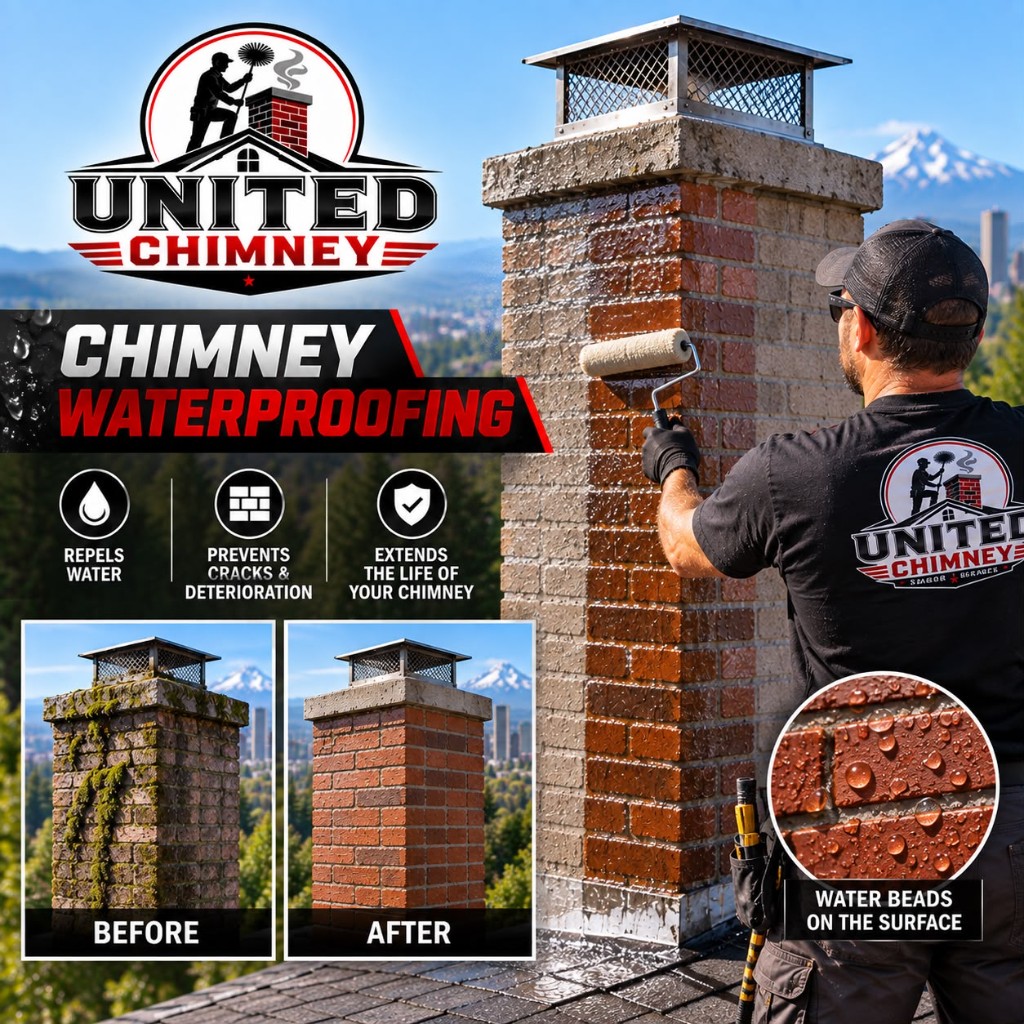
A breathable sealant that keeps rain out of the brick while still letting trapped moisture escape — the cheapest protection an Oregon chimney can get.
Brick is a sponge, and Oregon is wet. A chimney stands fully exposed on the highest part of the roof and takes rain from every direction for months at a stretch. The masonry soaks it up, cold nights freeze it, the ice expands, and the brick and mortar are pushed apart from the inside. Every cycle does a little more damage.
This is the part that matters, and it is where DIY attempts go wrong. A hardware-store waterproofer or masonry paint forms a film across the surface. That does keep rain out — but it also traps the moisture already inside the brick, which then has nowhere to go but further in. Sealed-in water freezes just as destructively, and you have made the problem worse while thinking you fixed it.
A proper masonry waterproofer is vapour permeable. Liquid water beads and runs off the face, while water vapour from inside the masonry still passes out. The brick sheds rain and dries. That distinction is the whole job.
Any dry stretch works, but late summer into early autumn is ideal — the masonry is as dry as it gets and the sealant has time to cure before the rain sets in. If we have just carried out repair work, we wait for the mortar to cure and then seal, so the repair is protected from its first winter onward.
Typically several years before it needs refreshing, depending on exposure and how much weather that side of the roof takes. We will tell you what to expect for your specific chimney.
A proper breathable sealant goes on clear and leaves the brick close to its natural appearance. It is not a paint and it should not gloss or darken the masonry once cured.
You can buy sealant, but the two things that decide whether it works are choosing a vapour-permeable product and repairing defects first. Getting either wrong traps water in the masonry and accelerates the damage.
Yes — arguably more so. Water damage happens whether or not you light fires, and an unused chimney is the one nobody notices deteriorating until masonry starts coming down.
Sweeps, inspections, repairs and waterproofing across the Portland metro and Oregon.